Piping systems are a critical part of many industrial facilities, particularly within the oil and gas, petrochemical, chemical, power generation, and process industries. These systems often operate under high pressure, elevated temperatures, and demanding environmental conditions. Regular inspection is therefore essential to identify deterioration, maintain mechanical integrity, and support safe and reliable operation.
API 570 Piping Inspection provides a recognised framework for the in-service inspection, rating, repair, and alteration of piping systems. Developed by the American Petroleum Institute (API), the standard is designed to help owner-users establish effective inspection and condition-monitoring programmes for piping that is already in service.
What Is API 570 Piping Inspection?
API 570 is the Piping Inspection Code: In-Service Inspection, Rating, Repair, and Alteration of Piping Systems. It covers inspection activities for in-service metallic piping systems and associated pressure-relieving devices within its defined scope. The purpose is to provide a structured approach for assessing piping condition and identifying changes that could affect continued safe operation.
An effective API 570 inspection programme can help asset owners identify corrosion, erosion, cracking, thinning, mechanical damage, and other forms of deterioration before they develop into serious integrity concerns.
Why Is API 570 Inspection Important?
Industrial piping can deteriorate for a variety of reasons. Process conditions, corrosion mechanisms, temperature fluctuations, pressure, vibration, environmental exposure, and operational changes can all affect the condition of piping over time.
Regular inspection helps organisations:
- Identify potential defects and deterioration
- Monitor pipe wall thickness and corrosion rates
- Assess the remaining integrity of piping components
- Support appropriate inspection intervals
- Identify areas requiring repair or further examination
- Maintain compliance with applicable inspection requirements
- Reduce the risk of unexpected failures and operational disruption
The objective is not simply to find defects. A well-managed inspection programme provides reliable information that helps asset owners make informed decisions about maintenance, repair, continued operation, and future inspection requirements.
What Does an API 570 Inspection Involve?
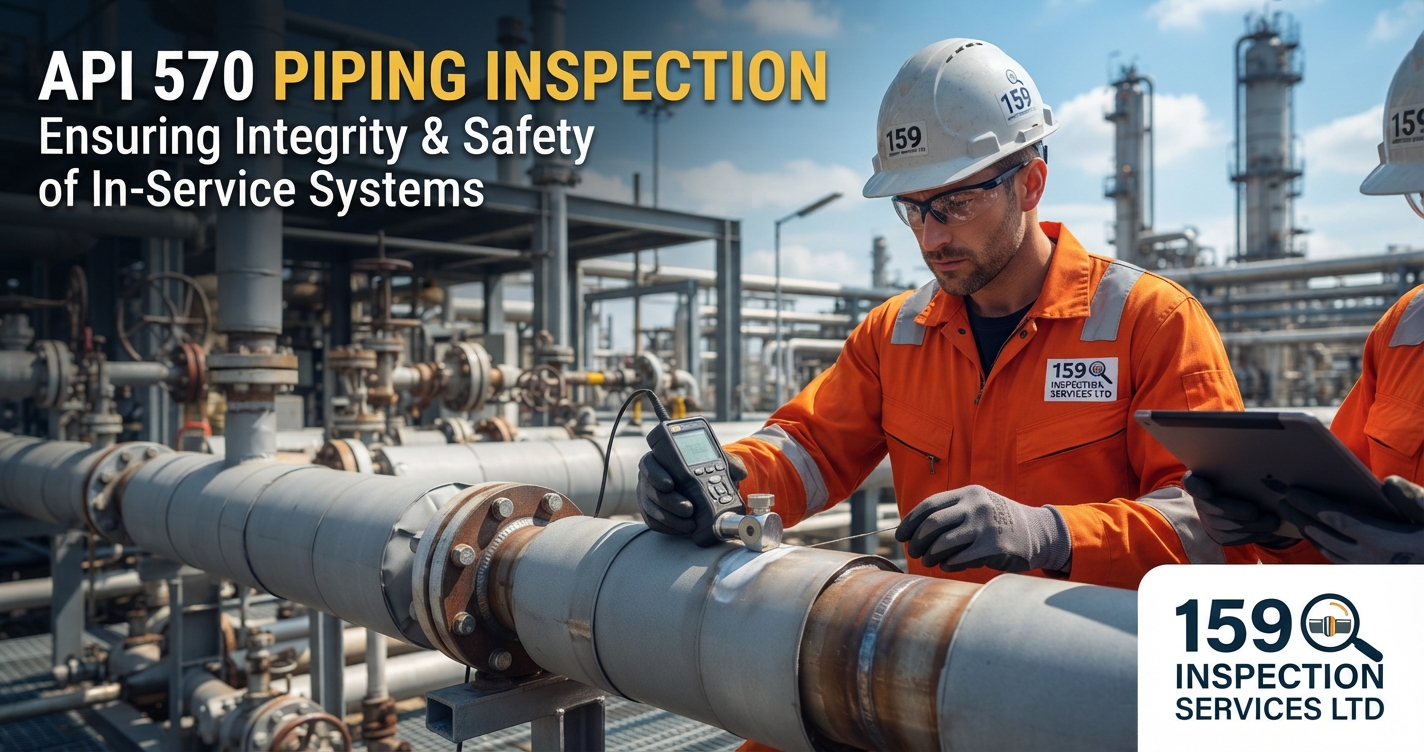
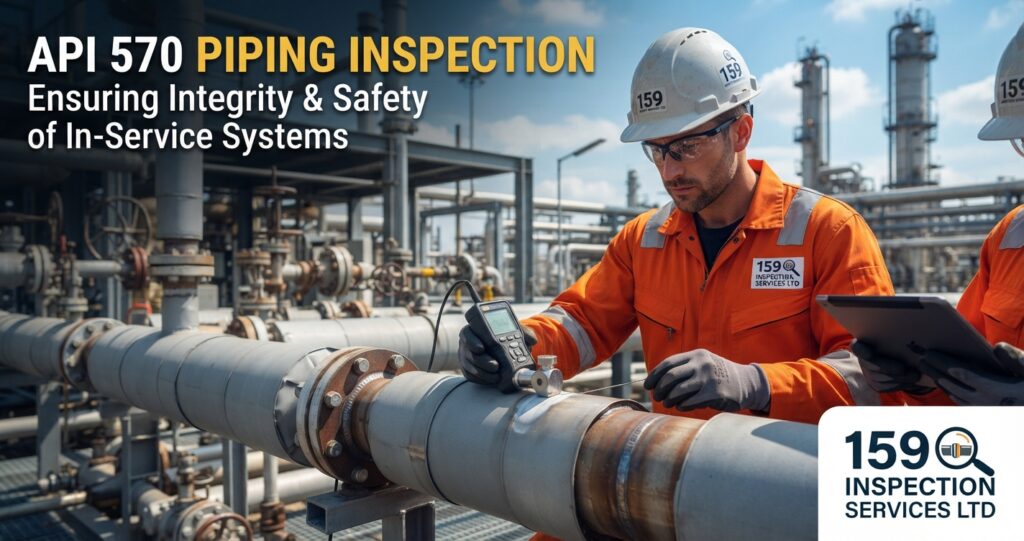
The inspection approach depends on the piping system, its service conditions, previous inspection history, and potential damage mechanisms. Inspection activities may include visual examination, thickness measurements and appropriate non-destructive examination techniques.
Inspectors may focus on areas where deterioration is more likely to occur, including welds, elbows, branches, dead legs, injection points, supports, drains, vents, and other locations identified through the inspection programme.
Inspection findings can then be evaluated alongside previous records to identify trends such as increasing wall loss or changes in the condition of specific components.
Common Piping Damage Mechanisms
Understanding potential damage mechanisms is an important part of piping integrity management. Depending on the process and operating environment, piping may be affected by corrosion, erosion-corrosion, corrosion under insulation, stress corrosion cracking, fatigue, galvanic corrosion, soil corrosion, and other mechanisms.
API Recommended Practice 571 provides guidance on damage mechanisms affecting fixed equipment in refining and related industries and is among the publications associated with the API 570 inspection framework.
Identifying the likely damage mechanism allows inspection activities to be planned around the actual risks associated with the piping system rather than relying solely on routine visual checks.
Who Can Benefit from API 570 Inspection?
API 570 inspection is particularly relevant to facilities where process piping forms an important part of the operation, including:
- Oil and gas facilities
- Petrochemical plants
- Chemical processing facilities
- Power generation facilities
- Industrial manufacturing sites
- Water and utility facilities
- Other process industries with in-service piping systems
159 Inspection Services supports clients across sectors including oil and gas, petrochemical, chemical, power generation, water and utilities, and renewables.
Professional API 570 Inspection Services
Choosing an experienced inspection provider is important when the integrity of critical piping systems is involved. Professional inspection requires appropriate technical knowledge, suitable inspection methods, accurate reporting, and a clear understanding of the operating environment.
At 159 Inspection Services, API 570 inspection is part of a wider range of industrial inspection and integrity services. The company works with asset owners, operators, and contractors to deliver safe, efficient, and professionally managed inspection solutions.
Their approach focuses on safety, quality, compliance, clear communication, and efficient project delivery, helping clients manage inspection requirements while minimising unnecessary operational disruption.
Protecting Piping Integrity Through Proactive Inspection
Piping failures can have significant consequences, including safety risks, environmental incidents, production losses, and costly emergency repairs. A proactive inspection strategy provides organisations with valuable information about the current condition of their piping assets and helps them address potential problems before they escalate.
API 570 provides an established framework for managing the inspection and integrity of in-service piping systems. By combining the appropriate inspection techniques with competent professionals, accurate records, and effective maintenance planning, businesses can improve asset reliability and support safer long-term operations.
For organisations looking for professional API 570 piping inspection services, working with an experienced inspection company can provide the technical support needed to assess piping condition and maintain confidence in critical industrial assets.