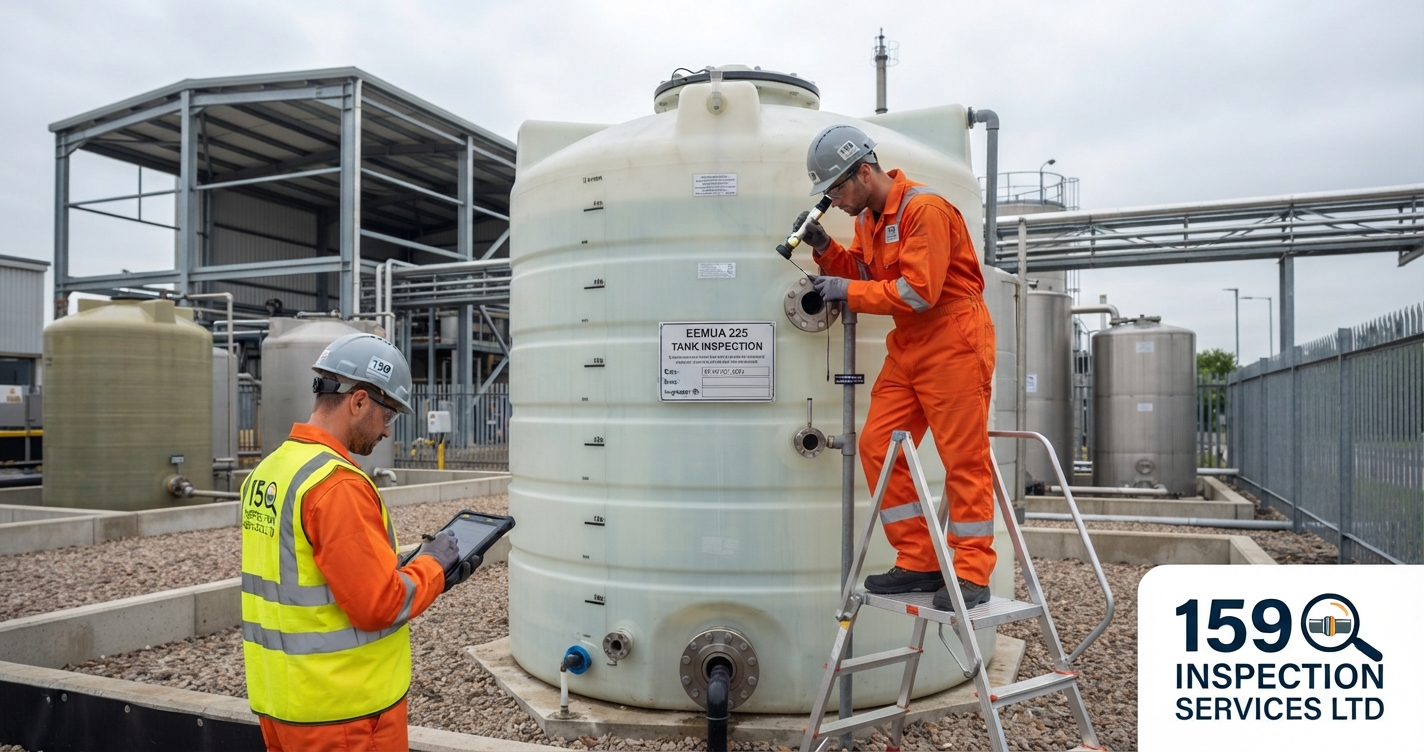
Above-ground plastic tanks are widely used across industrial and processing facilities for the storage and handling of chemicals, water, process liquids and other substances. Although plastic tanks can provide excellent corrosion resistance and long service life, they still require appropriate inspection and maintenance to remain safe and reliable throughout their operating life.
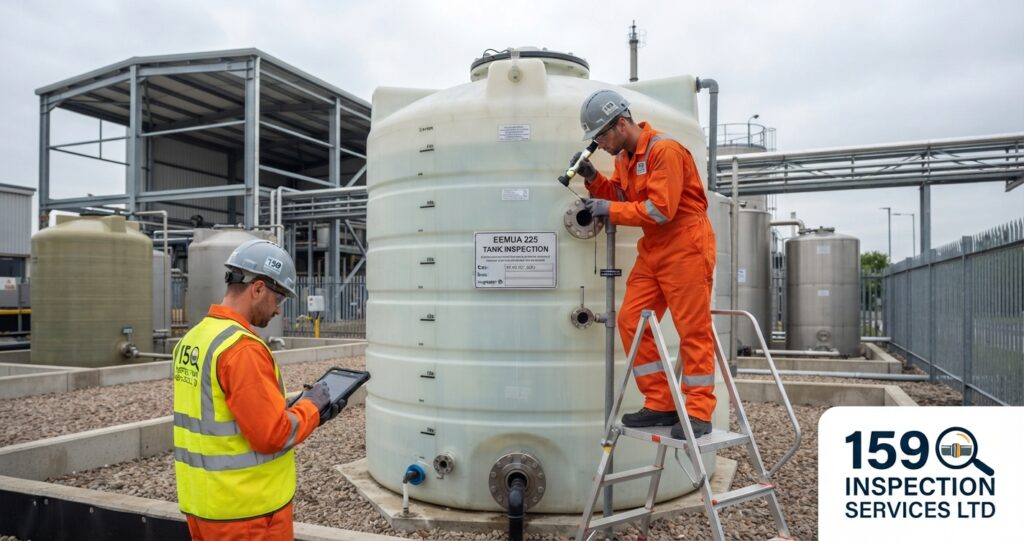
EEMUA 225 Tank Inspection provides a recognised approach for managing above-ground plastic tanks and is particularly relevant to organisations looking to assess tank condition, identify potential deterioration and support safe continued operation.
EEMUA Publication 225, Above Ground Plastic Tanks: A Guide to Their Specification, Installation, Commissioning, Inspection, Maintenance, Repair and Disposal, provides practical guidance covering the complete lifecycle of plastic tanks.
What Is EEMUA 225?
EEMUA 225 is an industry guide developed specifically for the management of above-ground plastic tanks. It is aimed primarily at cylindrical plastic tanks operating at atmospheric pressure or at pressures above the liquid head up to 0.5 bar. It is not intended for tanks that are classified as pressure vessels under the Pressure Equipment Directive, although some guidance may still be relevant in specific applications.
The guidance is designed to help owners and operators move away from a simple “fit and forget” approach and instead manage plastic tanks based on their actual operating conditions and service history.
Why Is EEMUA 225 Tank Inspection Important?
Plastic tanks can experience deterioration for a number of reasons. Chemical exposure, temperature, ultraviolet radiation, mechanical loading, installation conditions, operational stresses and ageing can all influence tank performance.
Regular inspection can help identify issues before they develop into significant integrity problems.
An effective inspection programme can help businesses:
- Identify visible damage and deterioration
- Assess the condition of tank walls, fittings and connections
- Identify signs of cracking, distortion or degradation
- Review tank supports and installation conditions
- Monitor changes in tank condition over time
- Support maintenance and repair decisions
- Reduce the likelihood of unexpected tank failure
- Help extend the service life of suitable tanks
EEMUA specifically highlights that considering the actual conditions of tank usage can help reduce the risk of failure and, where appropriate, support the extension of service life.
What Does an EEMUA 225 Tank Inspection Cover?
The inspection approach should reflect the tank’s design, material, contents, operating environment and previous inspection history.
Depending on the application, an inspection may consider the general condition of the tank body, connections, nozzles, pipework interfaces, supports, access arrangements and other relevant components.
Inspectors may look for signs such as:
- Cracking or splitting
- Deformation or distortion
- Discolouration or material degradation
- Surface damage
- Leakage or evidence of previous leakage
- Problems around fittings and connections
- Deterioration of supports
- Environmental or installation-related damage
Documentation and previous inspection records are also important. EEMUA’s plastic tank guidance covers areas including tank documentation, siting, installation, commissioning, inspection, safety, repairs, modifications and end-of-life considerations.
Common Issues Affecting Plastic Storage Tanks
Plastic tanks may appear robust externally while developing problems that require closer technical assessment. Common concerns can include chemical degradation, stress cracking, impact damage, excessive deformation and deterioration associated with environmental exposure.
Tank supports and installation arrangements should also receive appropriate attention. Poor support conditions or changes in the surrounding environment can place additional stresses on a tank.
Understanding the tank’s operating conditions is therefore an important part of an effective inspection strategy.
EEMUA 225 Inspection in the UK
For UK industrial facilities, professional tank inspection can form an important part of an overall asset integrity and maintenance programme. The inspection should be carried out by suitably competent personnel using appropriate inspection techniques and with consideration of the tank’s specific service conditions.
EEMUA 225 should be used according to the type and application of the tank. It is particularly relevant for above-ground plastic tanks manufactured from materials such as thermoplastics, GRP or dual-laminate construction. EEMUA’s own training information identifies these tank types as relevant to personnel responsible for specifying, inspecting, maintaining and operating plastic tanks.
Professional EEMUA 225 Tank Inspection Services
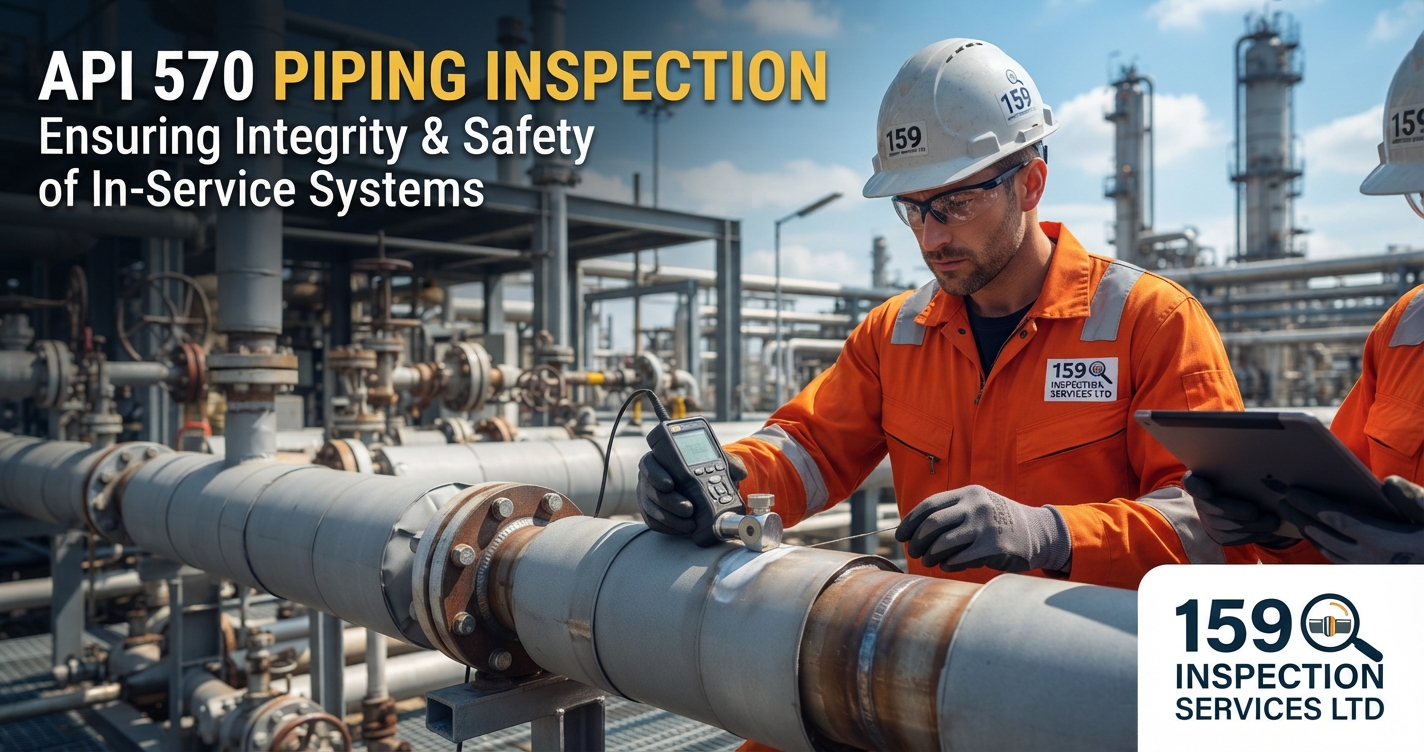
At 159 Inspection Services, EEMUA 225 inspection is offered as part of a wider range of industrial inspection services covering tanks, pipework and NDT. The company’s EEMUA 225 service focuses on the inspection and management of above-ground plastic tanks in line with the guidance provided by the publication.
Professional inspection can give asset owners a clearer understanding of tank condition and help them make informed decisions regarding maintenance, repair, continued operation or replacement.
Protect Your Plastic Tanks with Proactive Inspection
Plastic tanks should not be treated as “fit and forget” assets. Their condition can change throughout their service life depending on how they are installed, operated and maintained.
A structured EEMUA 225 tank inspection provides a practical way to assess the condition of above-ground plastic tanks and identify issues that may require attention. By combining competent inspection with appropriate maintenance and accurate records, businesses can improve asset reliability, reduce avoidable failures and make better-informed decisions about tank service life.
For organisations requiring EEMUA 225 tank inspection services in the UK, working with an experienced inspection provider can help ensure that plastic storage assets are assessed professionally and managed with safety, integrity and long-term reliability in mind.